
Ottawa’s set of murals have been an iconic draw to the city since their inception. Over the years, places like Starved Rock Hot Glass, Open Space Art Gallery, Grateful Clay Art Studio, and the Ottawa Center for the Arts have led to the cultivation of a flourishing art scene. With all this in mind, and the second year of the En Plein Air Art Fest on the horizon, we wanted to focus on these notable pieces of Ottawa artwork. If you’d like to learn even more about Ottawa’s murals, stop by the office and grab our Old Town Heritage Tour Book. It will take you on a self-led tour of the downtown area, covering our murals, historic architecture, and much more!
“The Day of the Great Debate”
Artist: Don Gray
Location: Corner of Jackson & LaSalle St. Directly south of Washington Square
Gray portrays the excitement of the crowd at the 1858 Lincoln-Douglas Debate. The debate drew between ten and twelve thousand onlookers to Washington Park on a hot, dry August day. Though Lincoln would lose the senatorial race to Douglas, the debate series put Lincoln at the forefront of Americans’ minds when it came to the presidential race two years later.

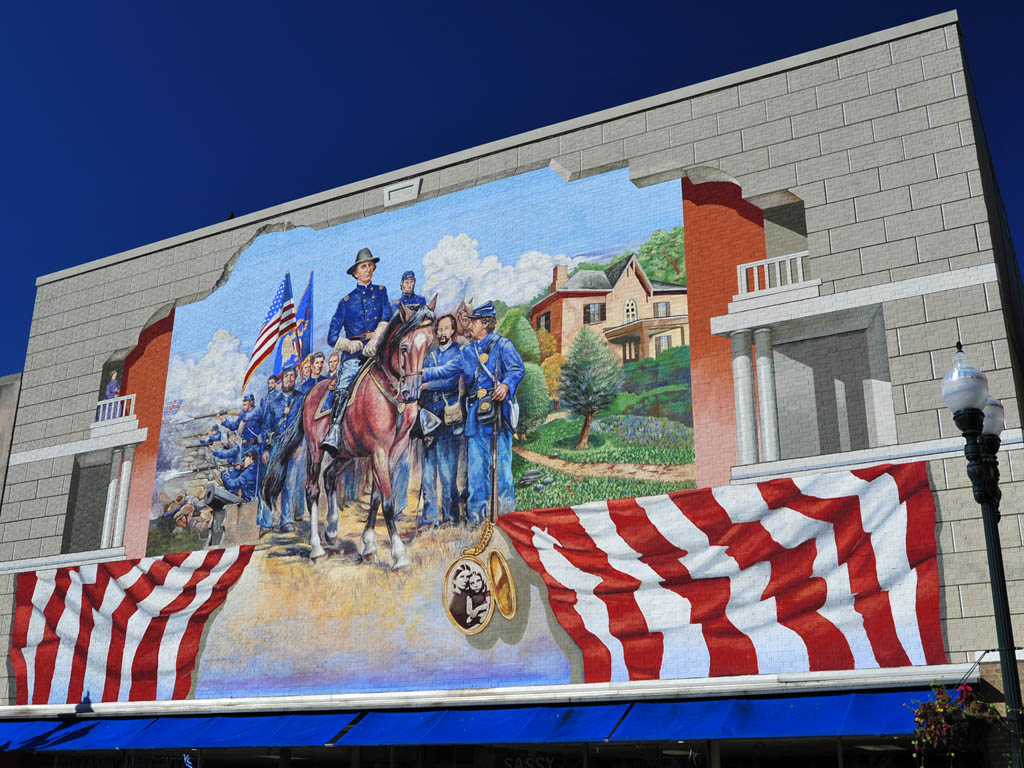
“The Life of General W.H.L Wallace”
Artist: G. Byron Peck
Location: 813 LaSalle St
Around the corner from “The Day of the Great Debate” is a mural featuring Lincoln’s friend, General W.H.L Wallace. The general is joined on the mural by several soldiers from Ottawa, and a locket depicting his wife, Ann, and their daughter, Isabelle. The Wallace family home, The Oaks, also makes an appearance. Wallace was recently the subject of a documentary from the Ottawa Historical & Scouting Heritage Museum.
“Ottawa’s Earliest Residents”
Artist: Roger Cooke
Location: 812 LaSalle St
Before any French explorers or white settlers came to the area, Indigenous peoples and their tribes called it home. The name “Ottawa” is derived from the Algonquian linguistic family’s word “adawe,” meaning “to trade.” The bison pictured on the mural were an important part of life on the plains, providing food, clothing, medicine, and other integral items to Native American society.

“Peltier Glass Factory”
Artist: Designed by E. Colin Williams & painted by Murals by Jericho
Location: Corner of Jefferson & LaSalle St
Peltier Glass Company was a world-renowned producer of items such as opalescent glass, sheet glass, stained glass, and glass marbles. The mural depicts some of Peltier’s most famous clientele, St. Patrick’s Church, Chicago’s Cultural Center, and Ford Motor Co. Louis Comfort Tiffany purchased colored glass as well. Peltier Glass has been used worldwide.

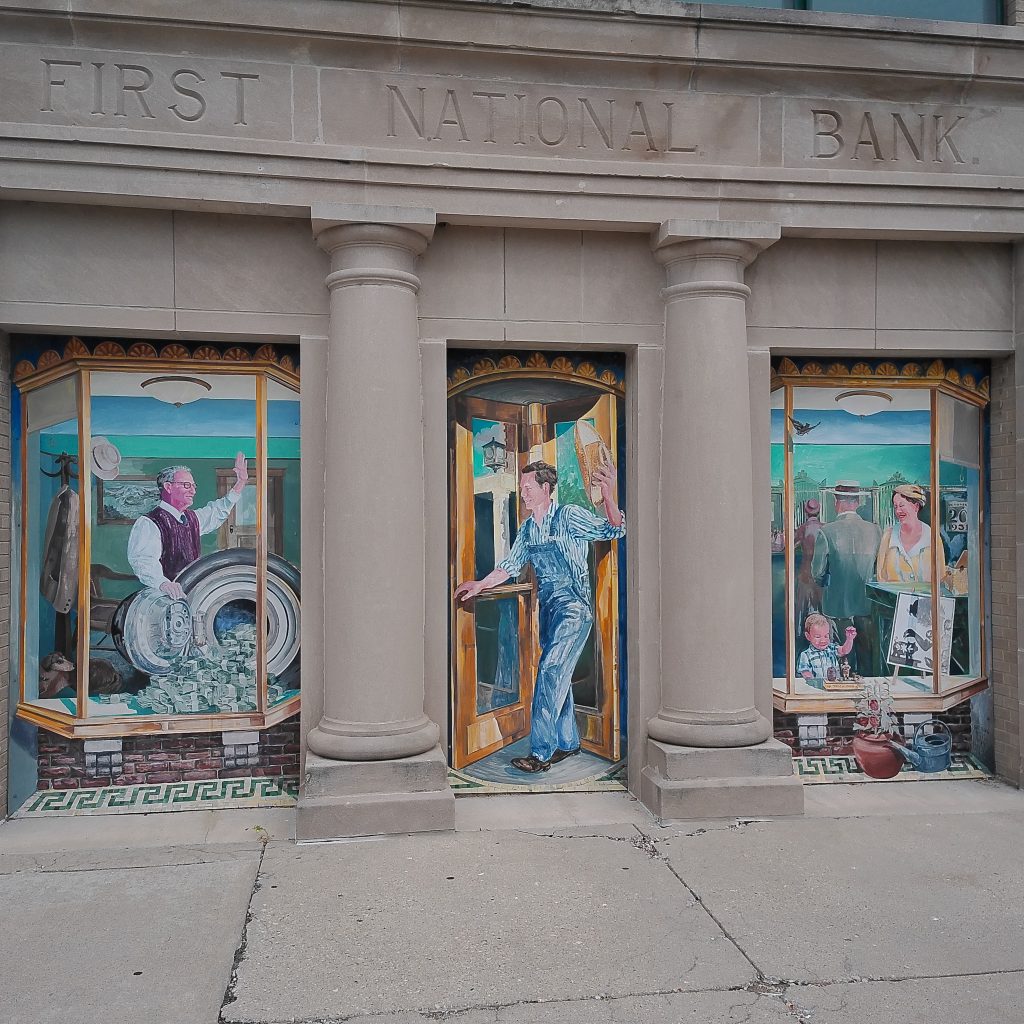
“Open for Business”
Artist: Thomas Melvin
Location: The side of First National Bank (701 LaSalle St.)
This mural depicts how the front of the bank would have looked during the Great Depression of the 1930’s. The First National Bank of Ottawa was the only local bank that survived the economic turmoil of the time. It has served the community since 1865. First National Bank is also the oldest bank in LaSalle County.
“Revolution”
Artist: John Pugh
Location: South side of Central Life Building (628 – 630 Columbus St)
Pugh’s “Revolution” honors women’s suffrage history, calling back to 1919, with flappers sat atop a false ledge. Georgia O’Keeffe’s “Poppy” symbolizes the feminine revolution of the time. The mural also features two of the Radium Girls, including Ottawa native Charlotte Purcell. Alongside other victims of the Radium Dial Company, Purcell’s case helped lay the foundation for modern day worker protection laws.

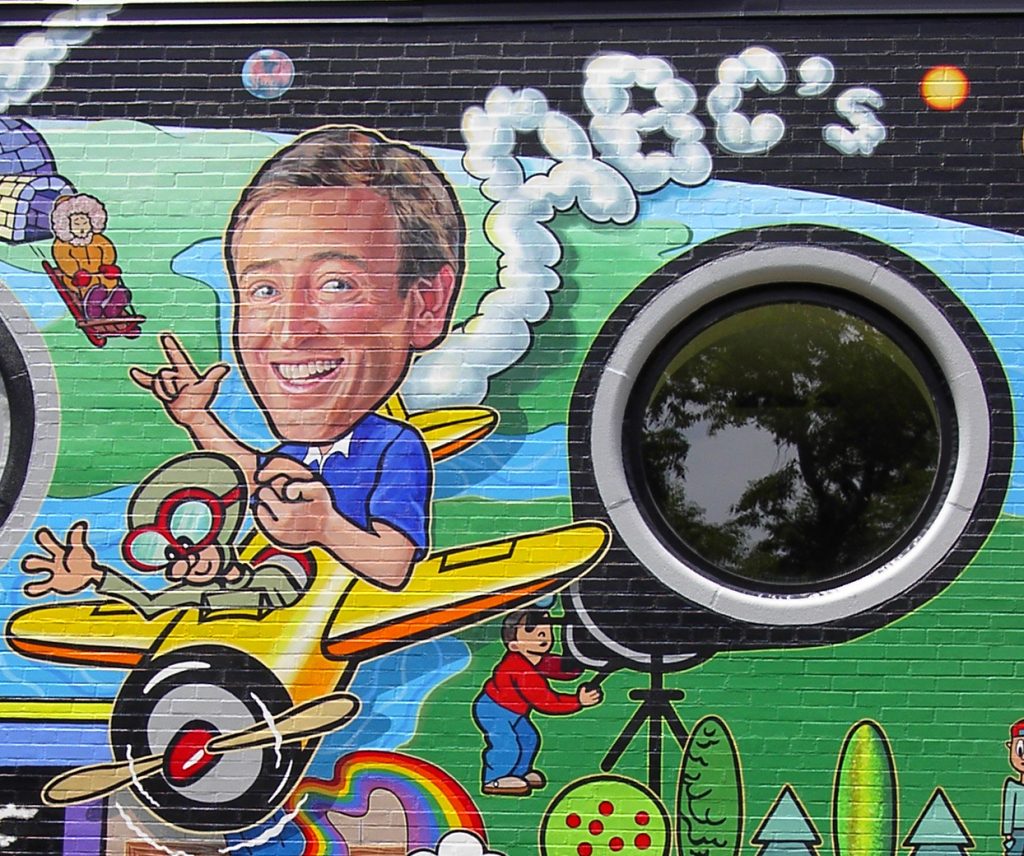
“Imagine and Learn with Bob McGrath”
Artist: Vicki Crone
Location: 1709 Columbus St
Jefferson School features this creatively designed mural. The building’s windows are incorporated into the artwork’s telescope and binoculars. You’ll find Ottawa native Bob McGrath, of Sesame Street fame, flying a yellow airplane. The many colors and swirling designs are an ode to children’s imaginations.
“The History of Communications”
Artist: Tim Trumbo
Location: 216 W. Lafayette St
Local artist Tim Trumbo created this mural as a timeline of communication in the area. It begins with contact between Europeans and local Indigenous peoples, and ends with the cell phone leading us to our modern idea of communications. Also featured in the mural, is a telegraph operator, from the Caton Telegraph Factory, a notable piece of Ottawa history.
